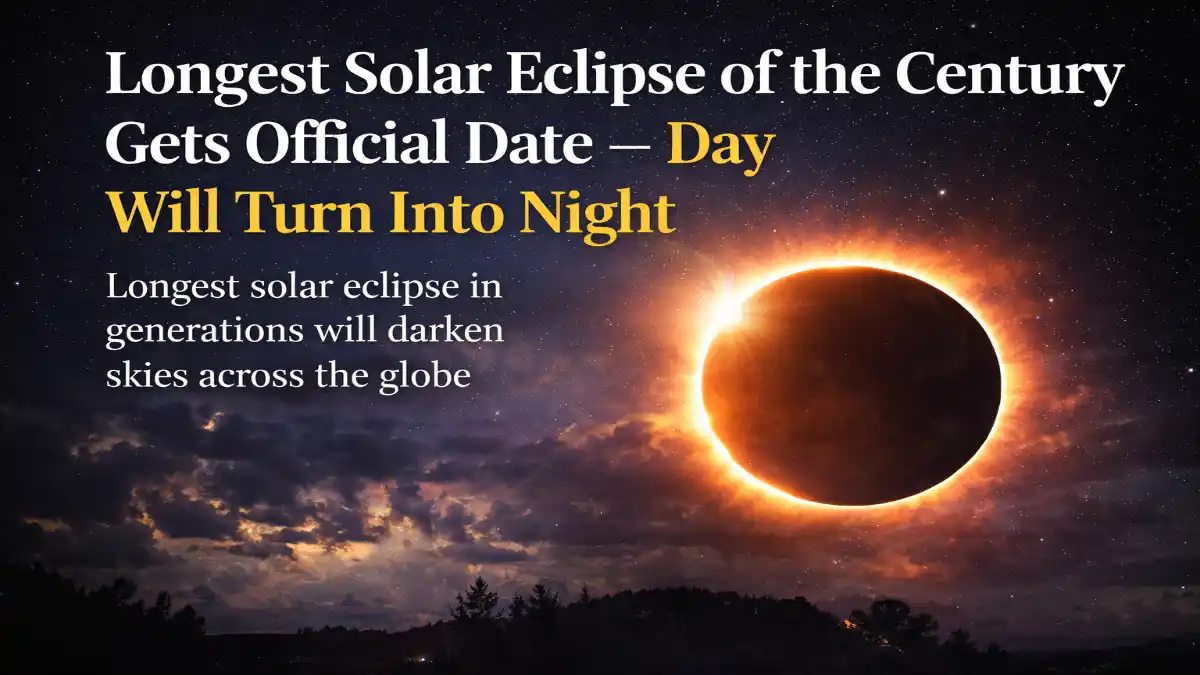
A rare astronomical event is set to capture global attention as the longest solar eclipse of the century now has an official date. Scientists and skywatchers around the world are preparing for this extraordinary phenomenon, which will briefly turn day into night across several regions.
This eclipse is expected to stand out not only for its duration but also for its wide visibility and dramatic visual impact.
What Makes This Eclipse Unique
Solar eclipses occur when the Moon passes between the Earth and the Sun, blocking sunlight either partially or completely. However, this upcoming eclipse is special due to:
- Exceptional duration compared to typical eclipses
- Extended totality phase in certain regions
- High visibility across multiple continents
These factors make it one of the most anticipated celestial events in recent history.
When Will It Happen
Astronomers have confirmed that the eclipse will occur on a specific date, drawing global interest from scientists, photographers, and enthusiasts.
While exact timings will vary depending on location, the event is expected to last significantly longer than most solar eclipses, offering viewers more time to observe the phenomenon.
Where It Will Be Visible
The eclipse will be visible across multiple parts of the world, with the path of totality covering select regions where the Sun will be completely obscured.
In other areas, people will experience a partial eclipse, where only a portion of the Sun is covered.
Visibility will depend on:
- Geographic location
- Weather conditions
- Time of day
What to Expect During the Eclipse
During the peak of the eclipse:
- The sky will gradually darken
- Temperatures may drop slightly
- Stars and planets could become visible
- A dramatic “ring of light” effect may appear around the Moon
This transformation creates a unique experience where daytime briefly resembles nighttime.
Safety Tips for Viewing
Looking directly at a solar eclipse without protection can be harmful. To safely enjoy the event:
- Use certified eclipse glasses
- Avoid direct viewing without protection
- Use indirect viewing methods like pinhole projectors
Proper precautions are essential to protect your eyes.
Why Global Excitement Is Building
Events of this scale are rare, especially ones with such long duration and wide visibility. The combination of scientific importance and visual spectacle is generating excitement worldwide.
Astronomers and enthusiasts are already planning observation events, making this a major global phenomenon.
Final Thoughts
The longest solar eclipse of the century promises to be a once-in-a-lifetime event for many people. With its official date now confirmed, preparations are underway for what could be one of the most memorable astronomical experiences of our time.