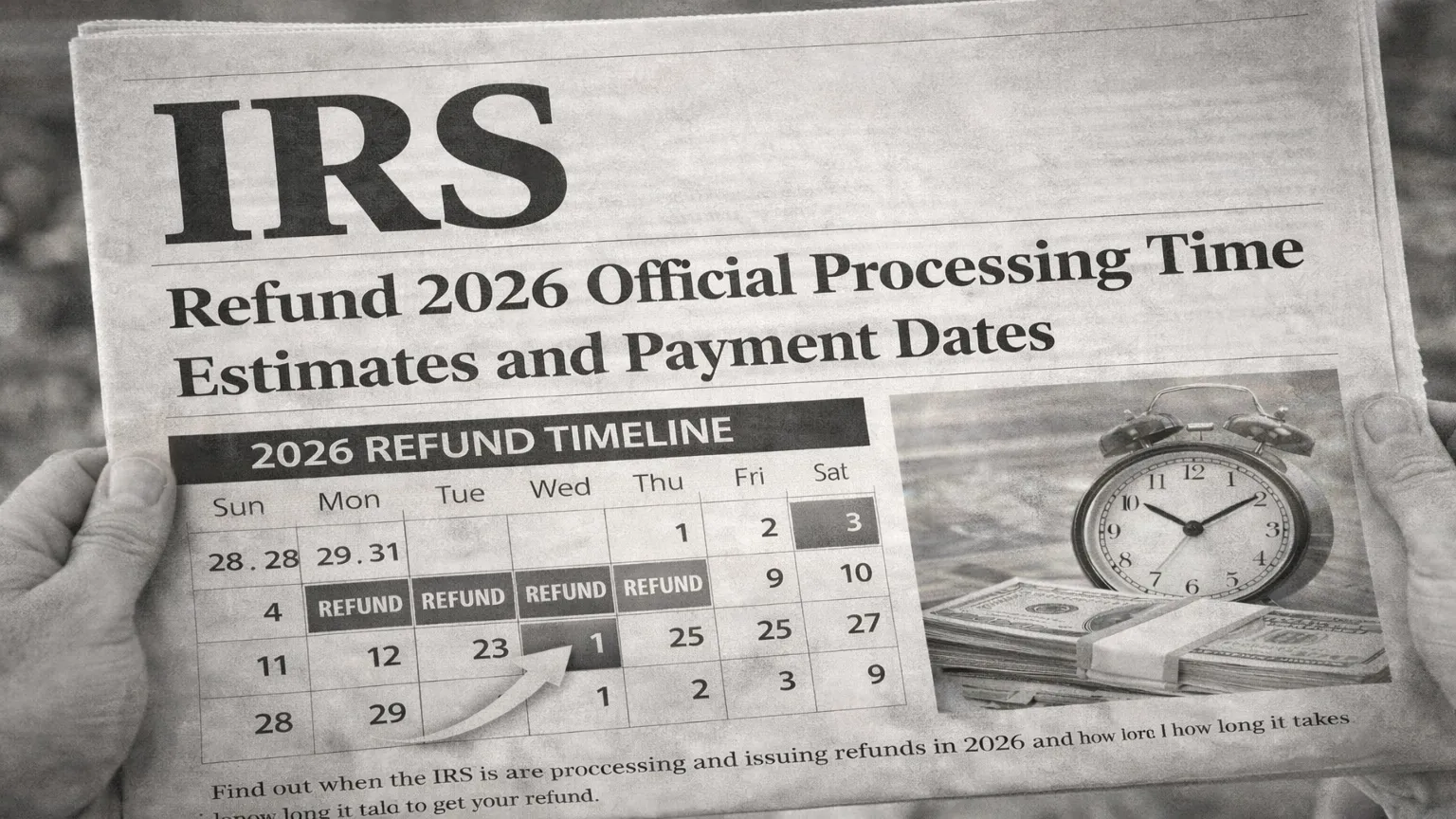
As the 2026 tax season unfolds, millions of Americans are preparing to file their federal tax returns and anticipate refunds from the Internal Revenue Service. A big question on everyone’s mind this year is: When will the IRS send refunds in 2026? Understanding the official processing time estimates and expected payment dates can help you plan your finances with confidence. This guide breaks down the timeline, what affects refund timing, how to track your refund status, and tips for receiving your payment faster.
How IRS Refunds Are Processed
When you file your tax return, the IRS begins reviewing it to ensure accuracy and compliance. Refunds are issued once your return is accepted and processed. The method you choose for filing and refund delivery — such as e-file with direct deposit — impacts how quickly you receive your payment.
Filing Methods and Typical Processing Times
| Filing Method | Refund Delivery | Estimated Processing Time |
|---|---|---|
| E-file + Direct Deposit | Fastest | Up to ~21 Days* |
| E-file + Paper Check | Slower | ~3–4 Weeks+ |
| Paper Return + Direct Deposit | Slow | 6–8+ Weeks |
| Paper Return + Paper Check | Slowest | 8+ Weeks |
*“~21 days” is a typical timeframe for electronically filed returns with direct deposit when there are no issues requiring manual review.
2026 IRS Refund Timeline: What to Expect
Official Start of Filing Season
The IRS generally opens the tax filing season in late January each year. Returns filed before this date may not be processed until the IRS begins accepting them for the season.
When Refunds Begin Arriving
For most taxpayers who file electronically with direct deposit, refunds begin arriving in late February 2026, roughly three weeks after the IRS begins processing returns. This early payout window marks the start of refund distributions.
Estimated Refund Windows by Filing Period
| Filing Period | Expected Refund Arrival |
|---|---|
| Late January Filers | Mid to Late February 2026 |
| Early February Filers | Late February to Early March 2026 |
| Mid February Filers | Early to Mid March 2026 |
| Late February Filers | Mid to Late March 2026 |
| March Filers | Late March to Early April 2026 |
Keep in mind that these are estimates based on typical IRS processing patterns and may vary depending on individual filing circumstances.
Why Direct Deposit Is Recommended
Choosing direct deposit for your refund remains the fastest and most secure method. Once the IRS issues your refund, it is electronically transferred directly into your bank account, often arriving within a few days of the “Refund Sent” status.
Benefits of direct deposit include:
- Faster delivery than mailed checks
- Eliminates risk of lost or stolen refund checks
- No need to visit a bank to deposit a paper refund
Most taxpayers prefer this option because it reduces processing time and provides peace of mind.
Special Considerations: EITC and Child Tax Credit
If you claimed the Earned Income Tax Credit (EITC) or Additional Child Tax Credit (ACTC) on your 2026 return, expect a slightly different timeline. Federal law prevents the IRS from issuing refunds for returns that include EITC or ACTC before mid-February, even if you file early.
For eligible filers, refunds typically begin arriving:
- Mid to Late February 2026
This delay is designed to prevent fraud and ensure compliance, but it can feel slower for taxpayers who file on the first available day.
Reasons Your Refund May Be Delayed
Even when you e-file with direct deposit, your refund may be delayed for several reasons:
Identity Verification Issues
If the IRS needs to verify your identity or suspects potential fraud, your return may be flagged for additional review. You may receive a letter requesting documentation.
Errors on Your Return
Simple mistakes — such as incorrect Social Security numbers, mismatched names, or math errors — can trigger manual review and slow down processing.
Paper Returns
Mailing a paper return instead of e-filing significantly increases processing times. Paper returns are handled manually and often take six to eight weeks or longer to process and issue refunds.
How to Track Your 2026 Refund
The IRS provides a free online tool called Where’s My Refund?, which allows taxpayers to monitor their refund status. The tool is also available through the IRS2Go mobile app.
To check your refund status, you will need:
- Your Social Security number (SSN)
- Your filing status
- Your exact refund amount
Once entered, the tool shows three possible stages:
- Return Received
- Refund Approved
- Refund Sent
When your status shows “Refund Sent,” direct deposit usually arrives within a few business days, depending on your bank’s processing times.
What to Do If Your Refund Is Late
If it has been more than 21 days since your return was accepted and your refund hasn’t arrived, start by checking the status using the IRS tracking tool. If the tool still shows “processing” or “return received,” your return may be under review.
Avoid filing a second tax return for the same year, as this can cause confusion and further delays.
Respond quickly to any IRS correspondence requesting additional information. Prompt response helps move your refund forward.
Final Thoughts
The IRS refund schedule for 2026 provides a helpful framework for taxpayers to understand when they might receive their refunds. With most electronically filed returns and direct deposit selected, refunds typically arrive within about three weeks after acceptance.